Beta This website is in development — content and design are still changing
IAMC

Model

COFFEE – COmputable Framework For Energy and the Environment model COFFEE

The COFFEE models was developed at COPPE/UFRJ, Brazil, for assessing climate, land, energy and environmental policies, providing relevant information to experts and decision-makers about the possible development strategies and repercussions of long term climate scenarios. It is a perfect foresight linear programming optimization model, including 18 regions whose main purposes

The COFFEE models was developed at COPPE/UFRJ, Brazil, for assessing climate, land, energy and environmental policies, providing relevant information to experts and decision-makers about the possible development strategies and repercussions of long term climate scenarios.

It is a perfect foresight linear programming optimization model, including 18 regions whose main purposes are

  • Assessment of potential synergies/trade-offs in energy, environmental and climate policies
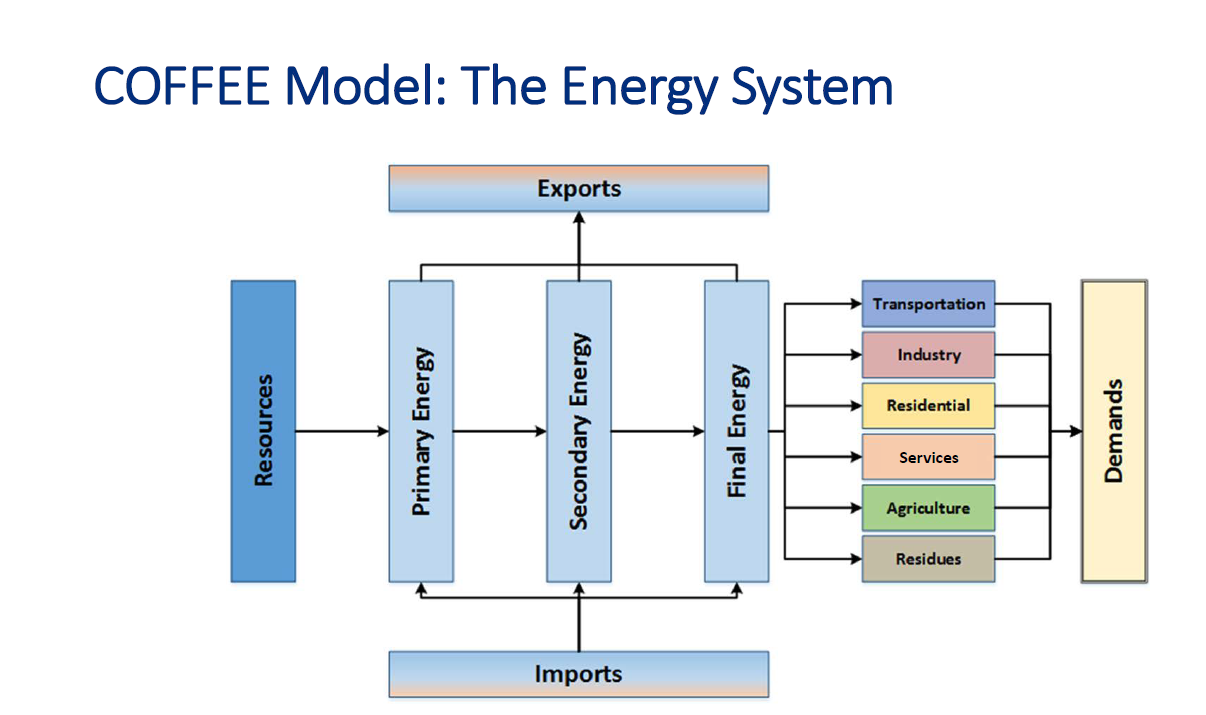
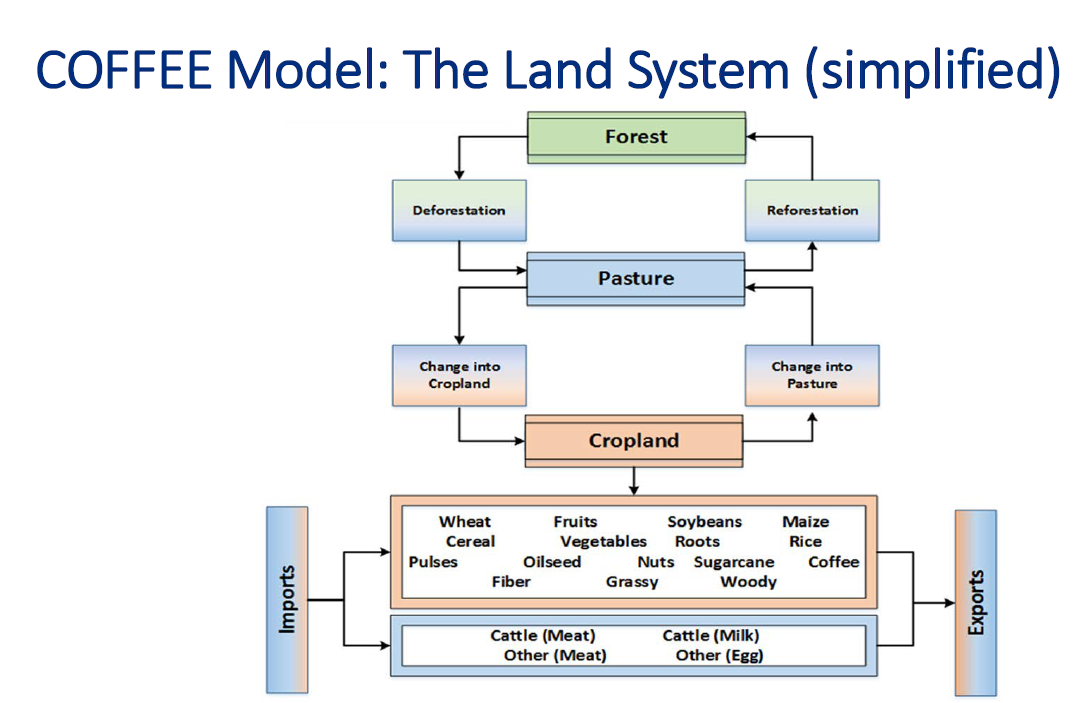
  • Completely integrated (hard-link) between energy and land
  • First global IAM built in a developing country.

The model can run on a stand-alone basis or linked through a soft-link process, providing long-term (up to 2100) assessments of the interaction between the energy and land-use systems and the economy.

More models

Celebrating the Release of GCAM-China-v8 to Support China’s National Climate Assessment

On April 12, 2026, the Center for Global Sustainability at the University of Maryland, Peking University and Tsinghua University celebrated the release of GCAM-China-v8. This update introduces a series of new features, including harmonization with the latest global GCAM v8.2 framework, updating the base year to 2021, introducing a provincial-level

IFs Model: Updates and Resources SSPs

We are pleased to share several recent developments and resources that may be of interest to the community: Preprint on New SSP OperationalizationA preprint article has been released introducing a new operationalization of the Shared Socioeconomic Pathways (SSPs) for 188 countries through 2150. This work covers a wide range of